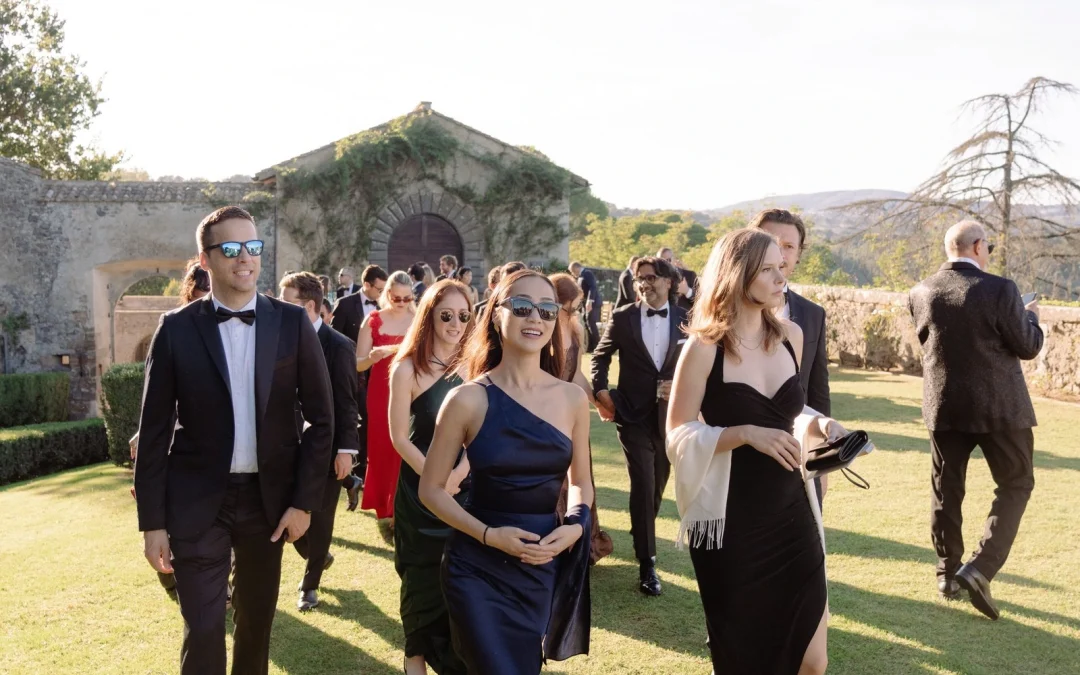
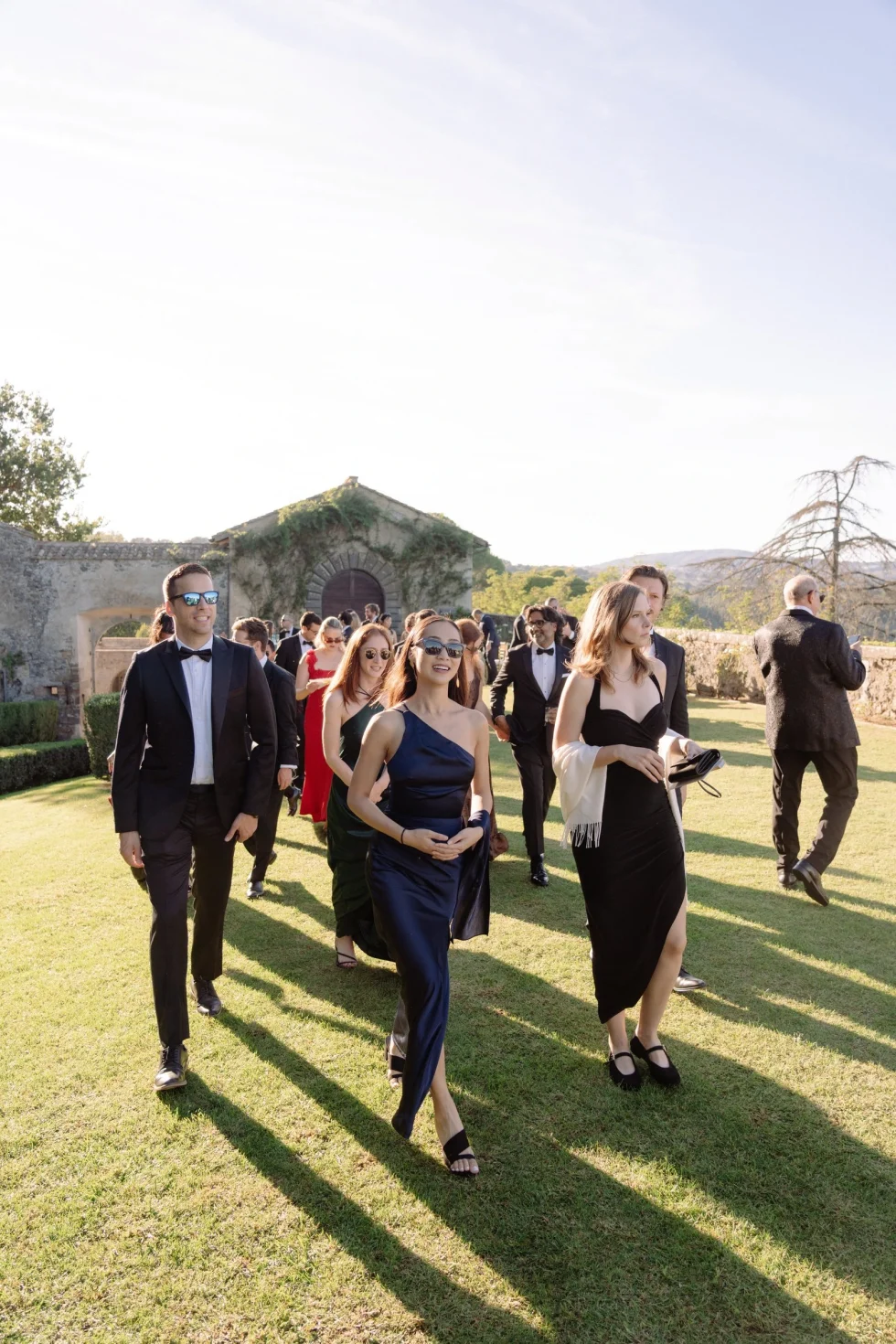
Couples ask us this question on behalf of their guests all the time, so here's the guide we wish we could forward. If you're wondering what to wear to a wedding in Italy, the short answer is: dress up a little more than you would at home, respect a few Italian customs, and plan for heat, old stones and long nights. The longer answer, with dress codes decoded and what looks best in photographs, is below.
Read the invitation, then the website
Destination weddings in Italy almost always have a dress code, often a different one for each event, and couples mean it. The wedding website usually explains them. When in doubt, ask the couple or the planner. They'd much rather answer the question than see you uncomfortable in a photo they'll keep forever.
Dress codes, decoded
- Black tie: a tuxedo for men; a floor-length gown for women. In Italy a long dress is the classic choice for any evening wedding.
- Black tie optional or formal: a tuxedo or a dark suit; a long dress or an elegant midi.
- Cocktail: a suit, tie optional; a midi or knee-length dress, or a chic jumpsuit.
- Garden or resort chic: lighter colors, linen and silk, flowing dresses, no tie.
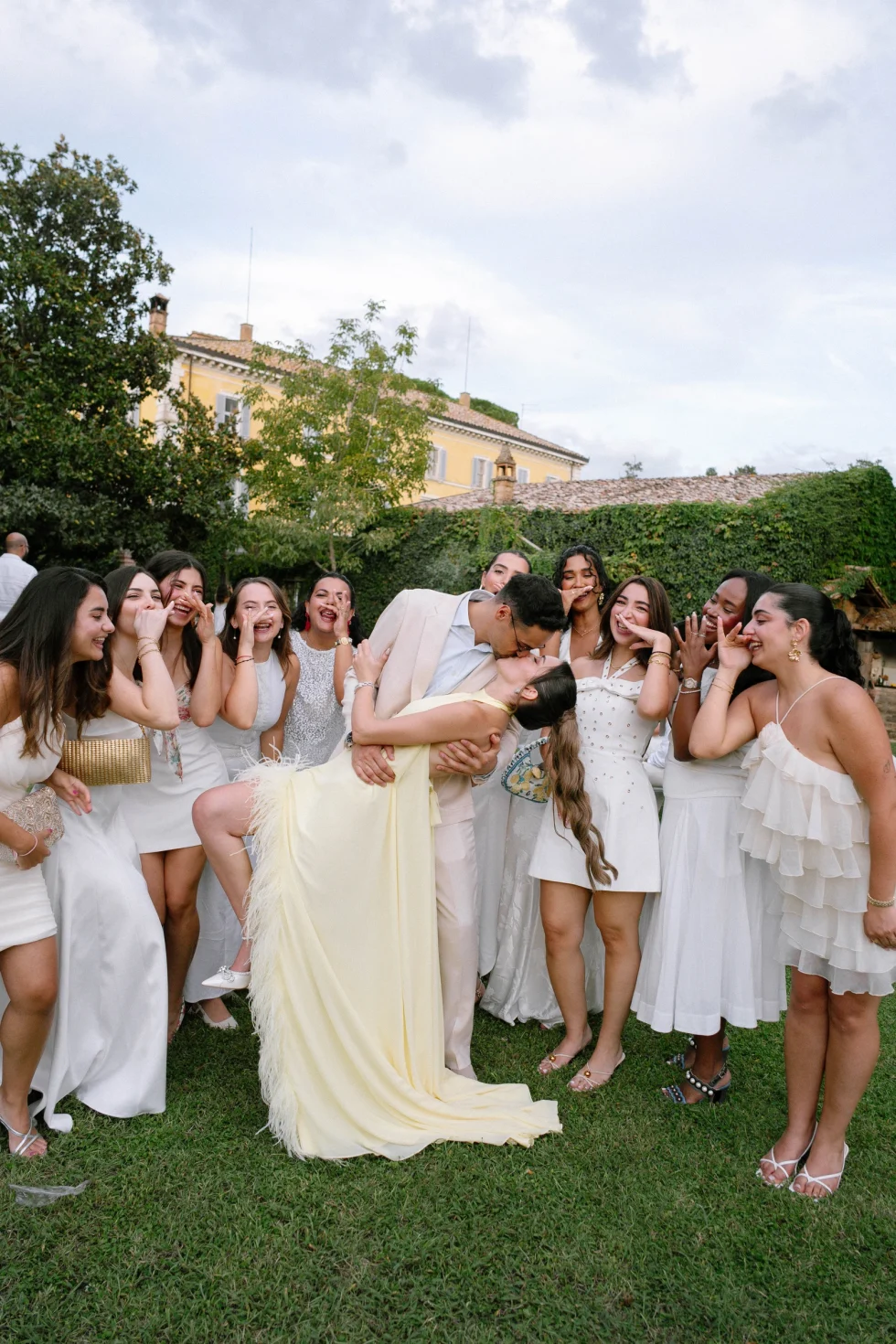
- Themed: all white, Dolce Vita, a color. Only wear white when the couple asks for it, as Hadi & Suzanne did for their welcome party at Palazzo di Bagnaia.
Colors Italians avoid
Italian wedding etiquette is a little more traditional than in the US, and a few colors carry meaning:
- White and ivory belong to the bride. This one is non-negotiable unless the couple asks for it.
- Total black at a daytime wedding can read as mourning to older Italian guests. In the evening, elegant black is widely accepted today.
- Bright, attention-grabbing red is considered by some to compete with the bride. Deep burgundy or wine tones read very differently.
- Neon and fluorescent shades feel out of place against old stone, and they reflect color onto faces in photographs.
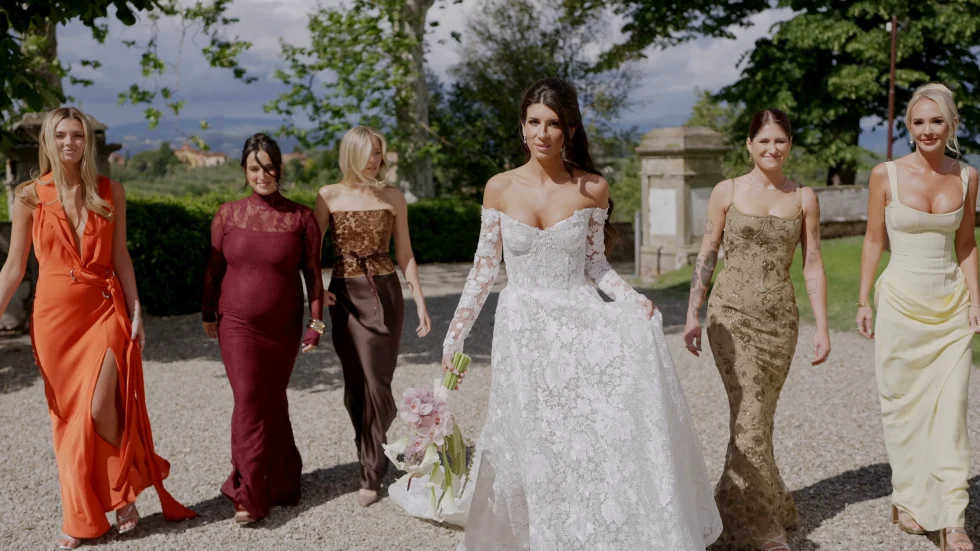
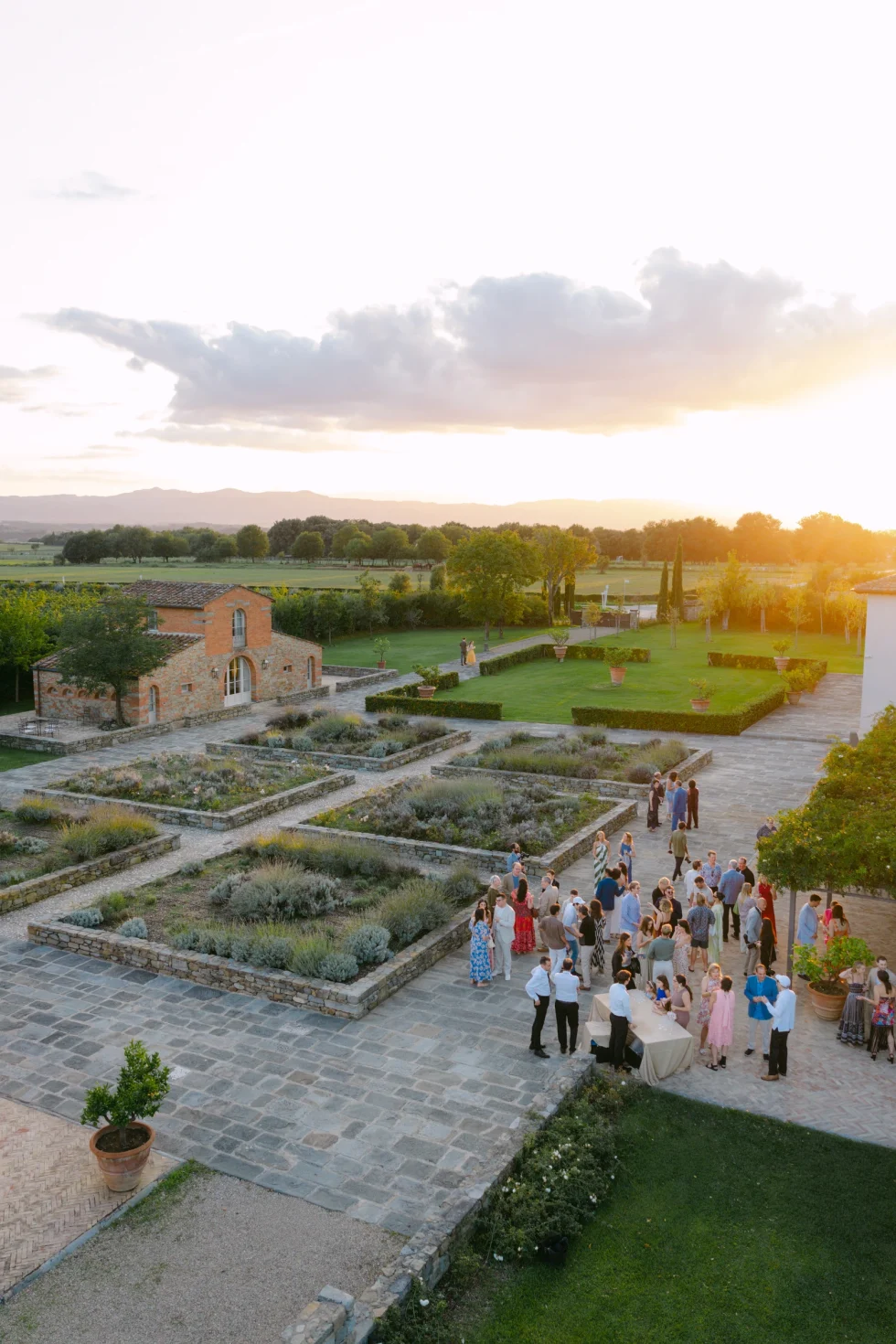
Beyond that, Italy loves color. Jewel tones look wonderful against stone and green gardens, and pastels shine in daylight. At Jenna & Jameson's wedding at Villa Corsini, the bridesmaids wore red, burgundy and gold chosen by the bride, and against the frescoes they looked like a painting.
Church ceremonies
If the ceremony is in a Catholic church, cover your shoulders and avoid very short hemlines. A light shawl, a bolero or a jacket is enough, and you can take it off at the reception. Major basilicas and some historic churches in Rome and Florence are strict about it, and staff may turn people away at the door. Leave hats on for women if you like; men should remove theirs inside.
Day or evening
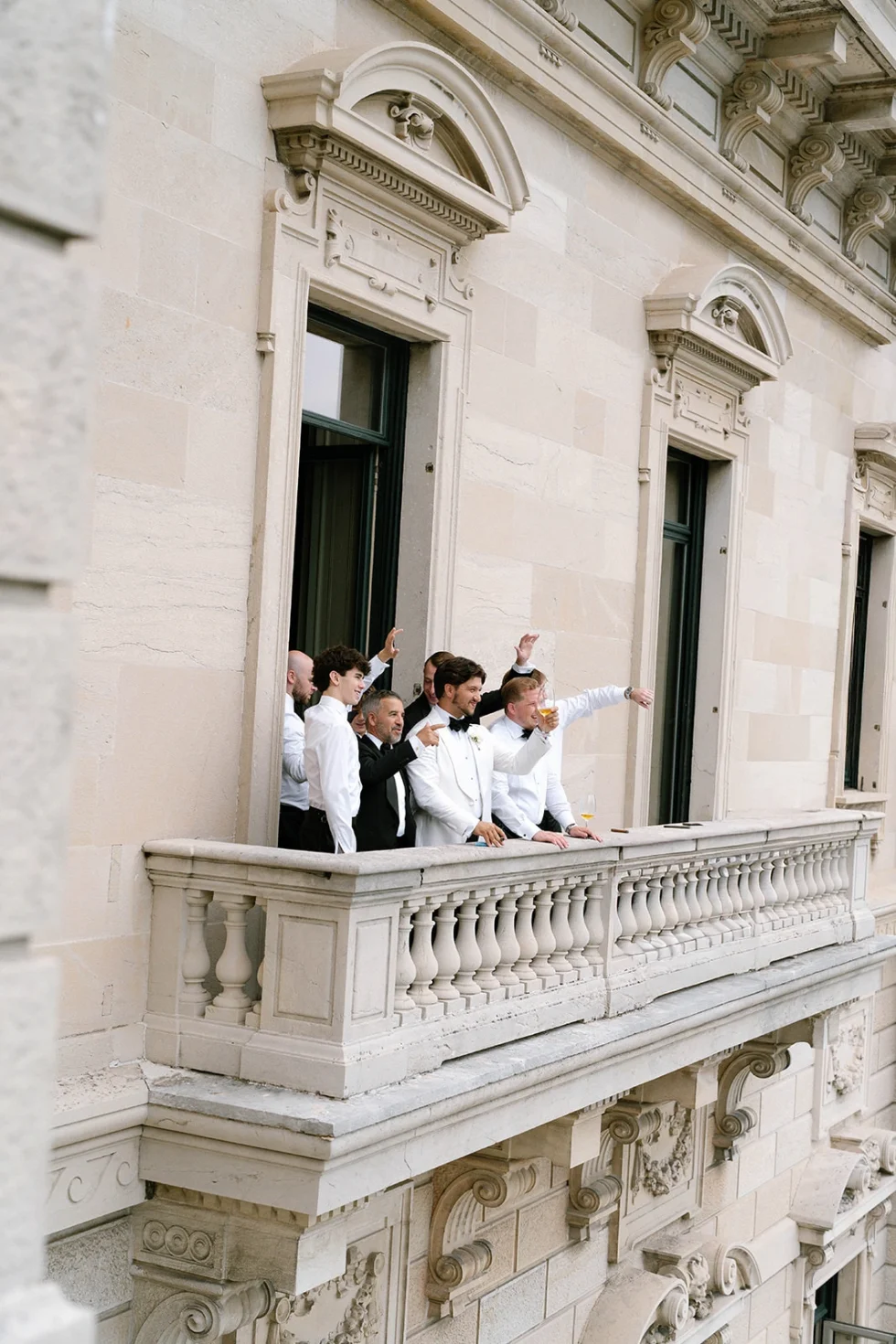
Italians still follow an old rule: the tuxedo is evening wear. For a daytime ceremony, a well-cut suit is right for guests, while a morning coat, called a tight in Italy, is usually reserved for the groom and close family. For women, a midi or knee-length dress suits daytime, and a long dress the evening. If the wedding runs from afternoon into night, dress for the evening and bring a lighter layer for the heat of the ceremony.
Shoes for old stones
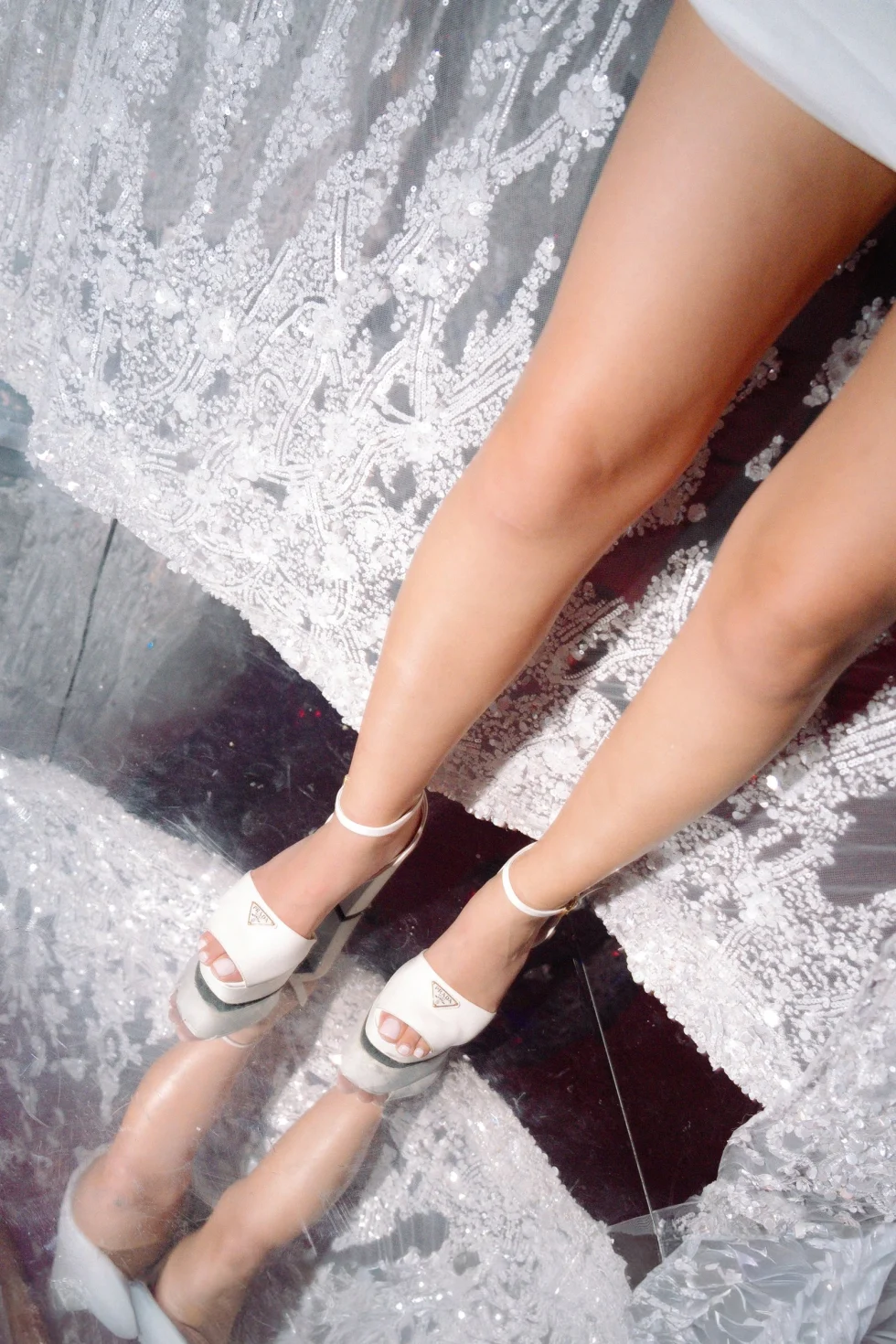
Italy means cobblestones, gravel paths, lawns and, on the Amalfi Coast, hundreds of steps. Stilettos sink into grass and slip on polished stone. Block heels, wedges and elegant flats will save your evening, and heel protectors help on lawns. You'll see plenty of guests switching shoes before dinner. Bring a pair you can actually dance in.
Heat, and cool evenings
From June to August, daytime temperatures in much of Italy often sit in the high 80s or low 90s °F, and heat waves go higher. Choose natural fabrics, like linen, silk and cotton, and lighter colors for afternoon events. After sunset it can cool quickly, especially in the hills of Tuscany and Umbria or on Lake Como, so bring a wrap or a light jacket. In May, September and October, it isn't optional. For outdoor daytime ceremonies, a hat and sunglasses are perfectly acceptable; just take the hat off if it blocks someone's view.
For men
- A well-cut suit in a light wool or a wool-silk blend for summer; linen for welcome parties and daytime events, less so for a formal dinner.
- A tuxedo for black tie, ideally with a white dinner jacket for a summer evening if the dress code allows.
- Loafers without socks are about as Italian as it gets, but only when the dress code is relaxed.
- Pack a tie even if you think you won't need it.
Packing it all
- Choose fabrics that don't crease badly, or bring a travel steamer. Many hotels offer pressing, but not always in a hurry.
- Carry your outfit in hand luggage if you can. Lost bags happen.
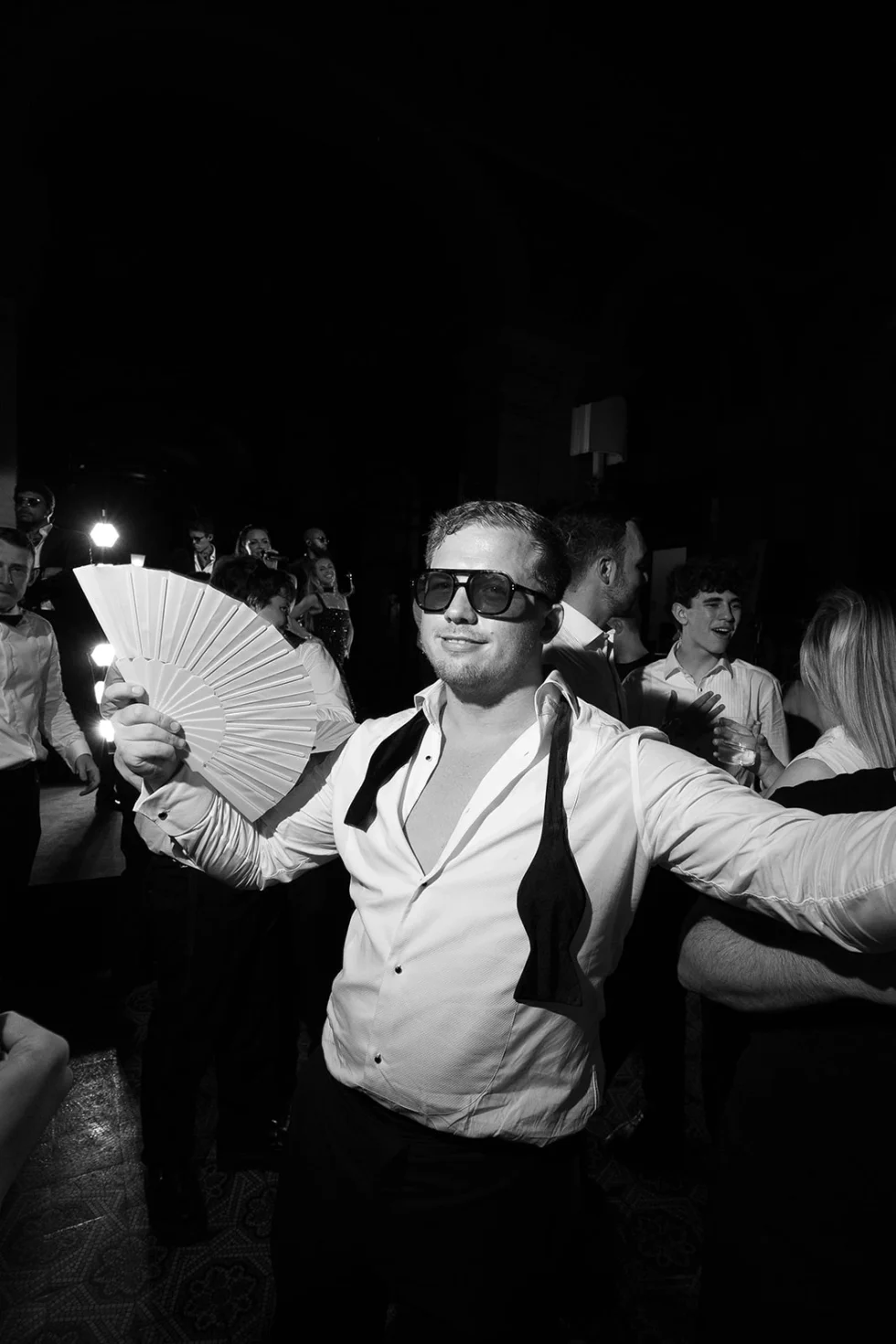
- A small evening bag, a wrap, comfortable second shoes, a fan in summer.
- One look per event, plus a spare in case of rain or a spilled glass of Chianti.
What looks best in the photographs
Guests often ask what will look good in the photos, and we see every outfit in the frame. Solid colors and natural fabrics photograph beautifully. Big logos and very busy patterns date quickly. Wide-brimmed hats shade faces in group photos, so be ready to take them off. And if the couple has asked for a color or a theme, go all in: a crowd that's dressed together makes the whole album look intentional.
Questions guests ask
Can I wear black to a wedding in Italy?
At an evening wedding, elegant black is usually fine. At a daytime wedding, especially with older Italian family present, add color or choose another shade.
Is a long dress necessary?
For black tie and most evening weddings in Italy, a long dress is the safe and expected choice. For daytime and cocktail dress codes, a midi is perfect.
Should I wear a hat?
Hats are welcome at daytime outdoor ceremonies and in the sun, less common in the evening. Fascinators are rarer than in the UK but not out of place.
For couples reading this: you can send this guide to your guests, and you'll find more help in our guides to a wedding weekend in Italy and luxury wedding trends for 2027. If you're looking for a photographer and filmmaker, we'd love to hear from you.
Inquire
Your date, our full attention
We accept a limited number of weddings each year, so that every couple receives the time and care they deserve. Whether your celebration has been planned for a long time or is coming together at the last minute, we would be delighted to hear your story.
Inquire about your date