A Jewish wedding has its own rhythm, and a film has to know it in advance. The ketubah is signed before most guests arrive. The seven blessings are sung once. The glass breaks in half a second, and the hora starts before anyone has found a seat. As a Jewish wedding videographer based in Rome, we film in Italy, in France and across Europe, and we travel worldwide, mostly for couples who fly in from the United States. We plan the film around those moments, with the photographs made by the same team. This is how we work, with real weddings to show for it.
Jewish weddings we filmed in Rome, in Tuscany and in Cannes
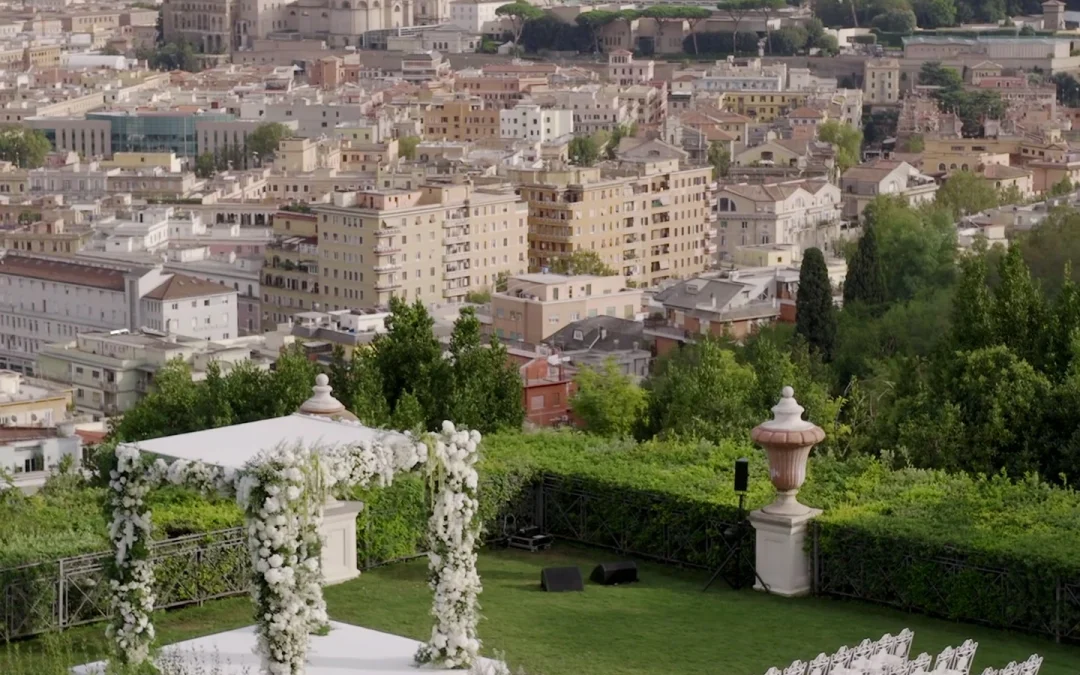
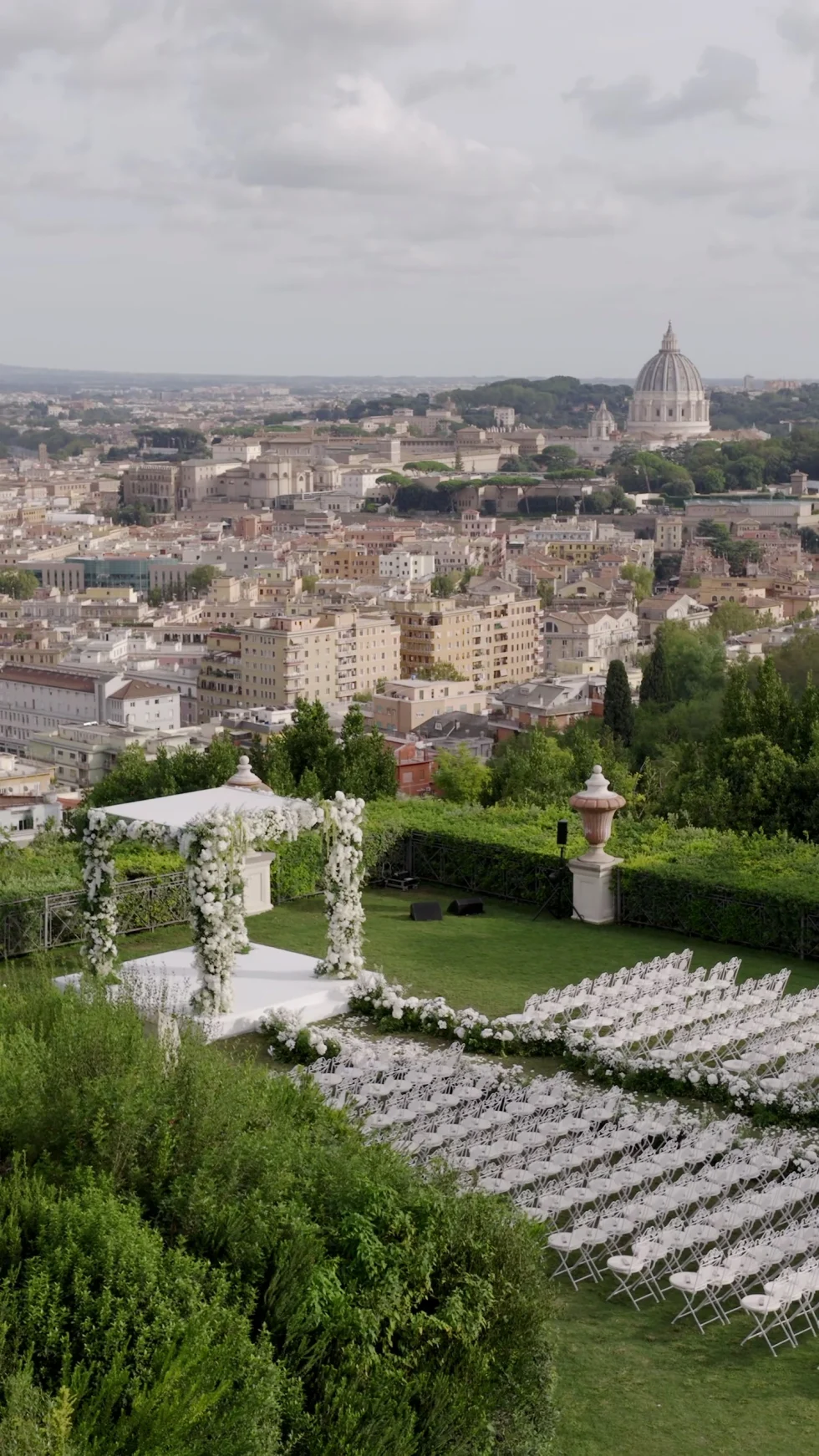
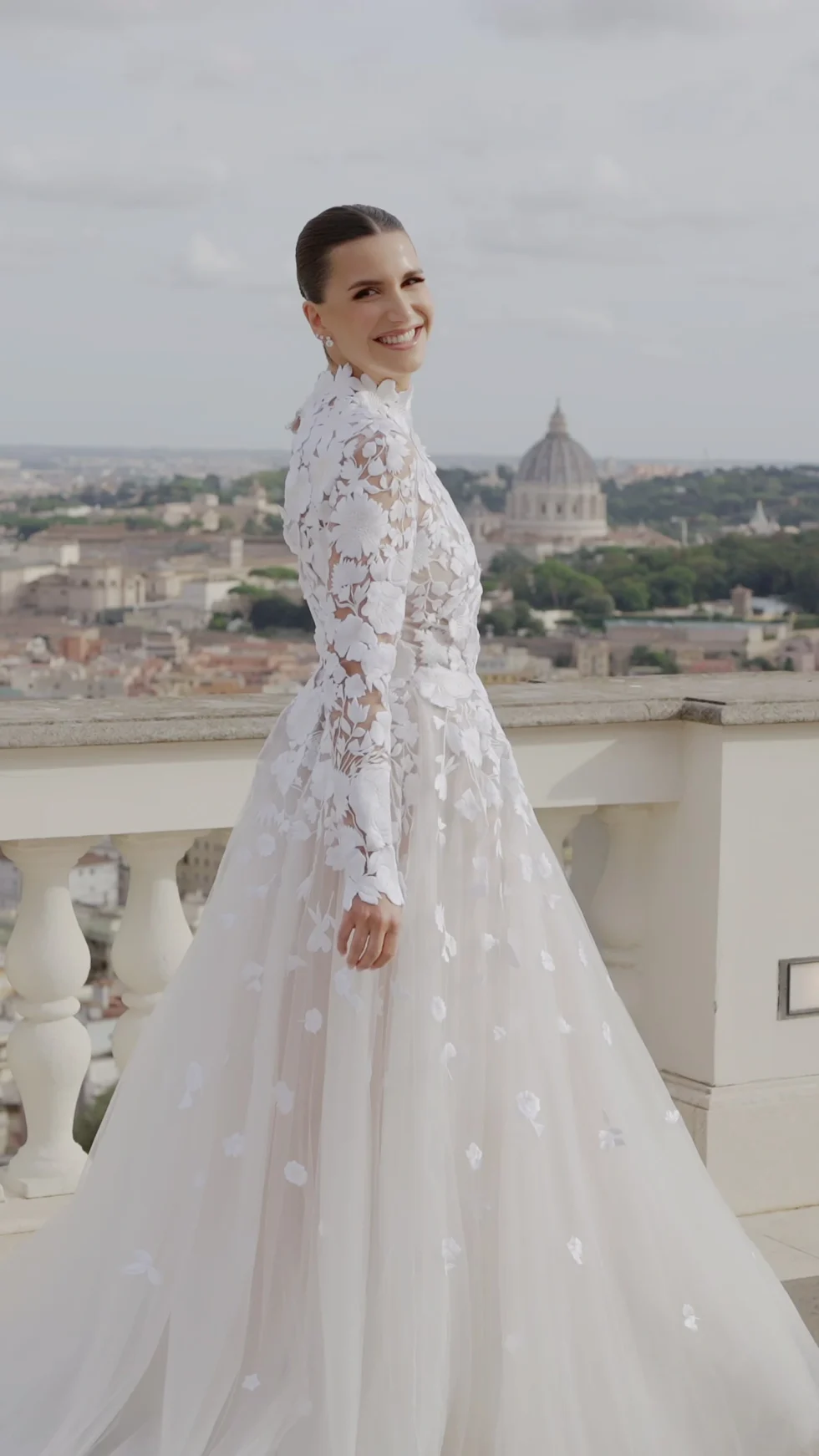
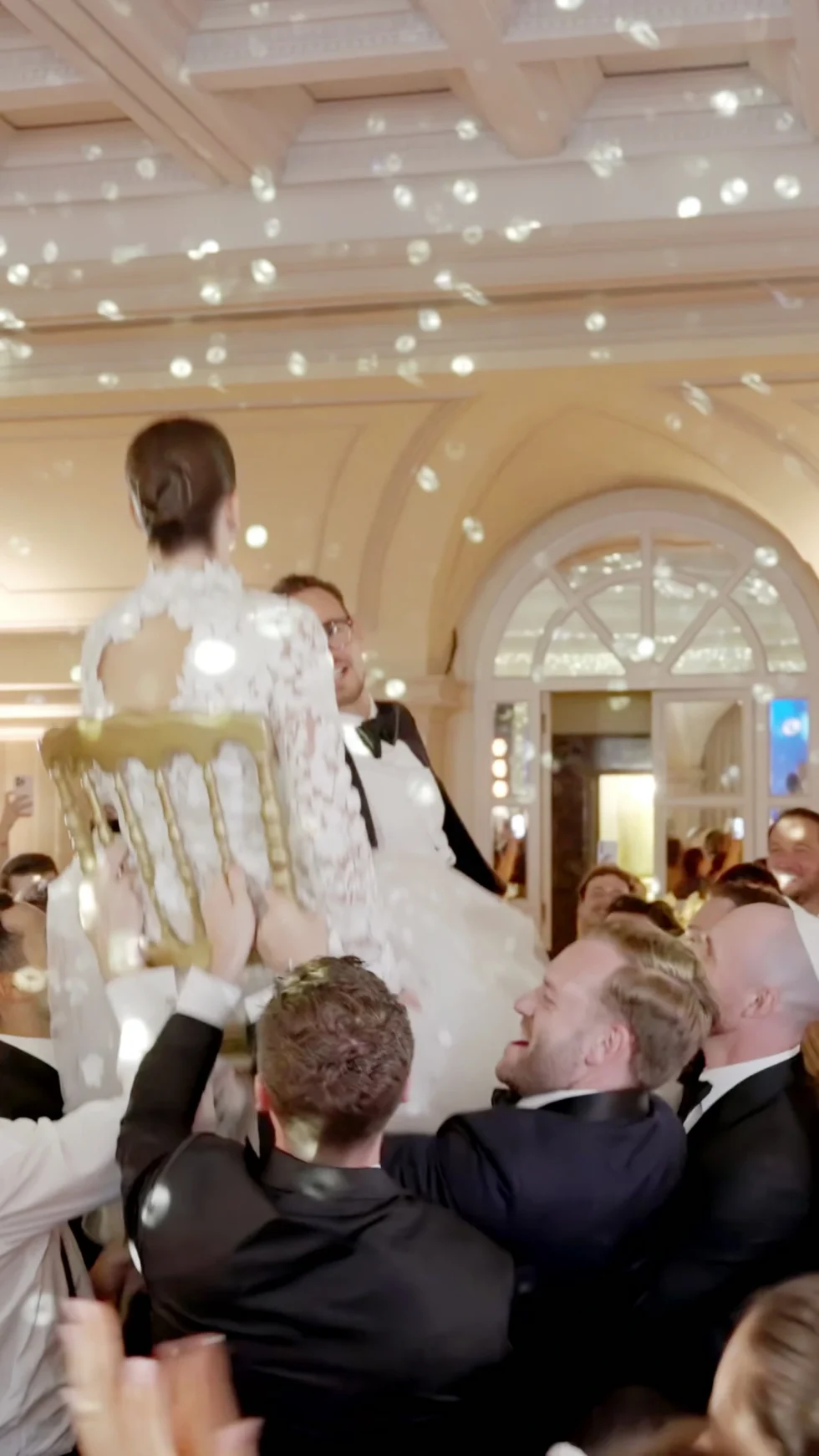
Mr. & Mrs. Moock married at Villa Miani, on Monte Mario, with Rome and the dome of St. Peter's behind their guests. The chuppah was a canopy of white flowers on the panoramic lawn, the groom stood wrapped in his tallit, and when the glass broke the whole lawn shouted mazel tov. Then the ballroom filled for the hora, with the bride lifted high on a chair. Their weekend had opened with a pizza party in a garden above the city. Watch their wedding film at Villa Miani and the welcome party in Rome.
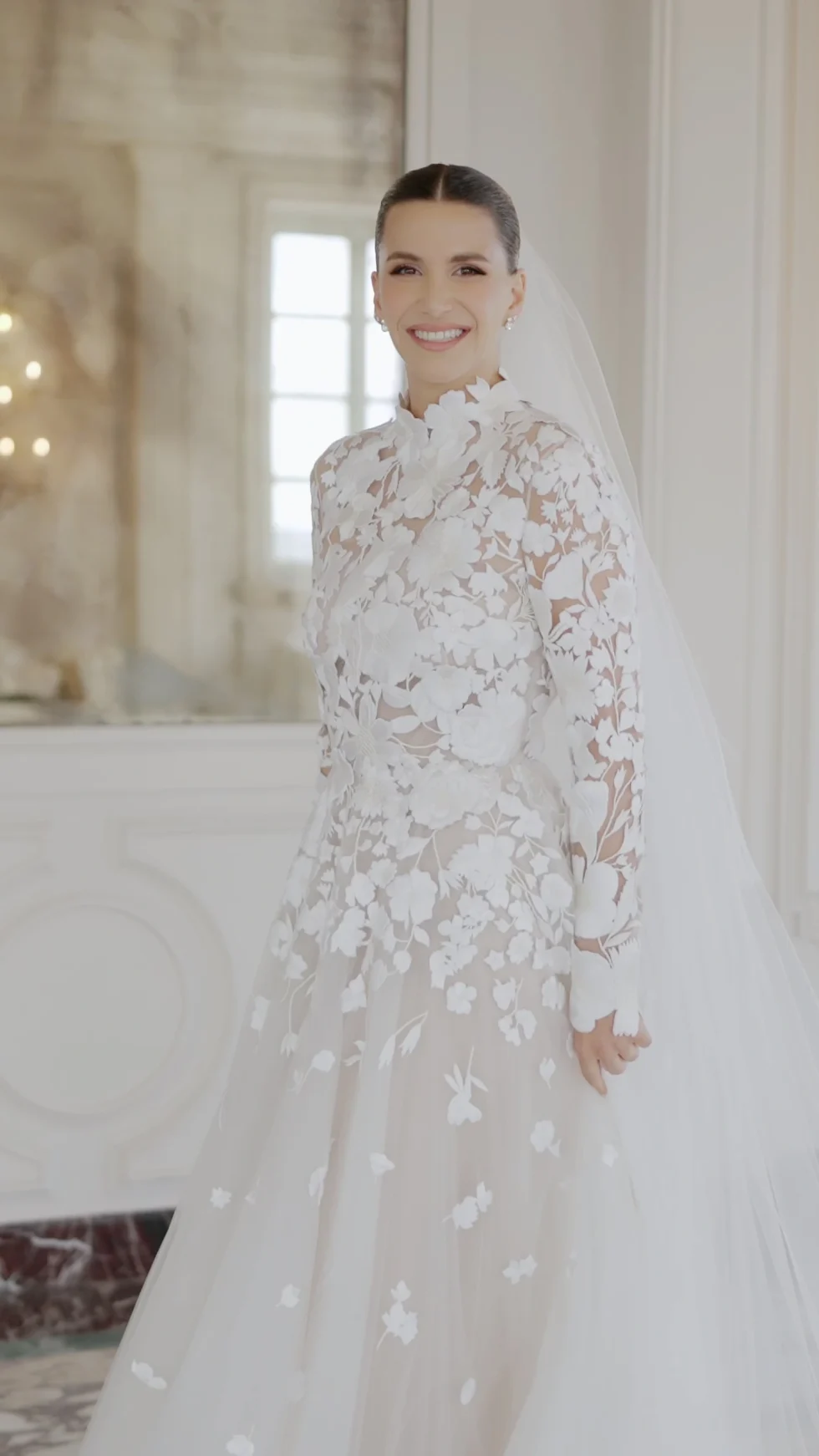
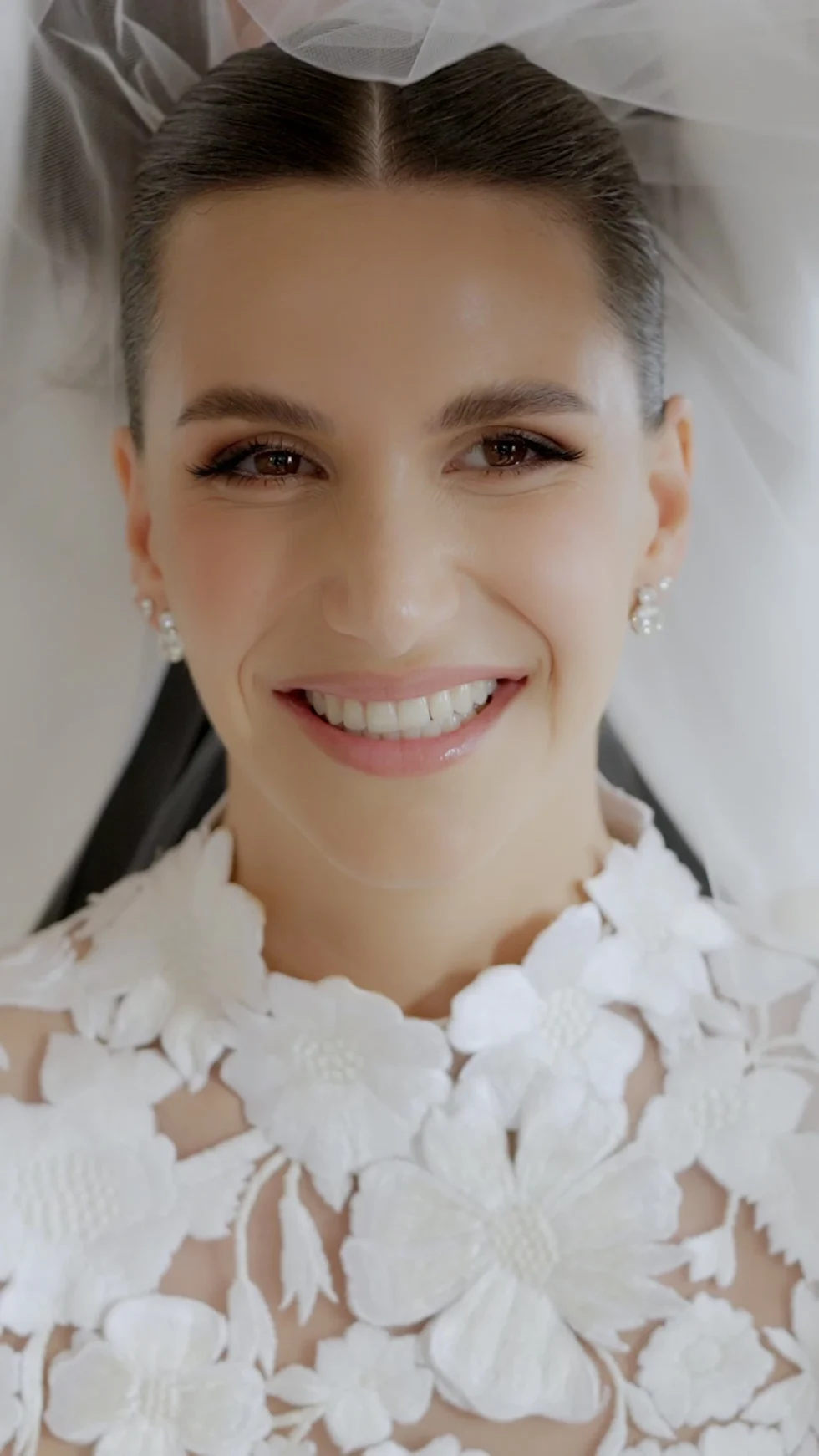
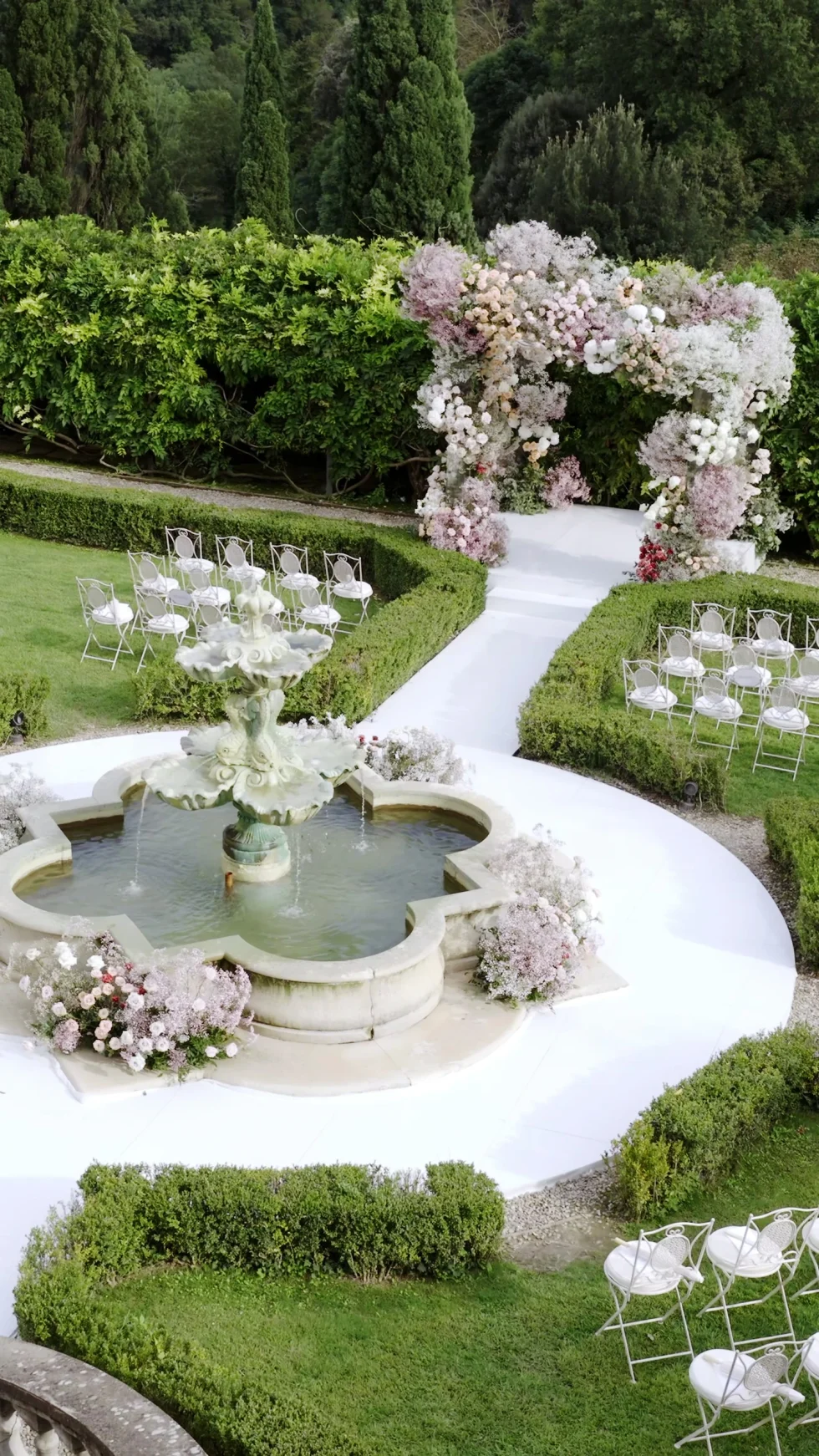
In Tuscany, Remy & Toby held their Jewish wedding at Il Borro, the medieval hamlet restored by the Ferragamo family between Florence and Arezzo. The ceremony was set in the Italian garden of the villa, with a white aisle winding around a stone fountain dressed with pink roses, and the weekend opened with a pizza party. Watch their wedding film at Il Borro.
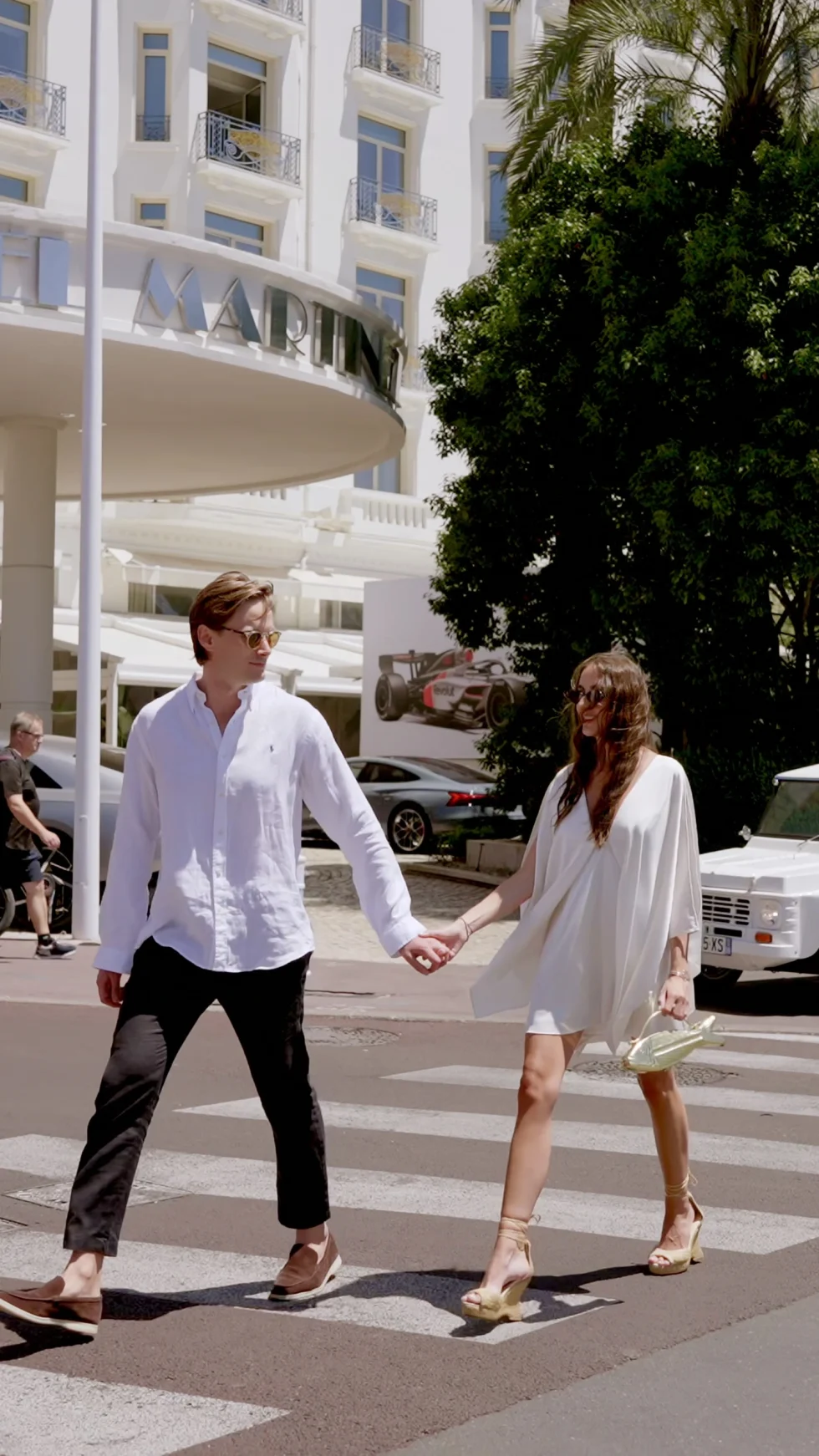
On the French Riviera, Maxim & Harriet opened their Jewish wedding weekend at the Hôtel Martinez in Cannes: a day on the private beach across the Croisette, long tables with rosé from Provence, and a welcome dinner that ended with napkins twirling in the air. Watch their film from Cannes.
What we film, in order
- The tisch and the kabbalat panim. The groom's table, with songs, a l'chaim and the teasing of friends, while the bride receives her guests. Two rooms at once, so we split the team.
- The ketubah. The signing with the witnesses, close on the hands and the text. If your ketubah is a work of art, we film it on its own before anyone touches it.
- The bedeken. The groom walks to the bride and lowers her veil. It lasts seconds and both faces matter, so we cover it from two sides.
- The chuppah. The processional, the circling, the blessings over the wine, the ring, the reading of the ketubah, the seven blessings and the glass.
- Yichud. We stay outside. Those minutes are yours.
- The hora and the party. The chairs, the mezinke for parents marrying off their last child, the speeches and the dancing that follows.
Sephardic and Mizrahi families often add a henna evening before the wedding, and some customs under the chuppah are different. Tell us your family's traditions and we'll plan for each of them.
Sound is half of a Jewish wedding film
Much of what makes a Jewish ceremony moving is heard rather than seen: the rabbi speaking to the two of you, a grandfather chanting one of the seven blessings, the ketubah read aloud in Aramaic. We put a small microphone on the rabbi and one on the groom, place a recorder at the chuppah, and take a feed from the band or the DJ for the hora. In the edit, those voices carry the film.
Under the chuppah: where the cameras stand
A chuppah is a small space with many people around it: the couple, the rabbi, both sets of parents, sometimes friends holding the poles. Sight lines close quickly. We agree our positions with the rabbi and the planner before the ceremony, keep one camera on your faces, one on your families and one wide for the setting, and stay still once it begins. Nobody should notice us during the blessings.
Shabbat, Saturday night and Sunday
Weddings aren't held on Shabbat, from Friday sunset to Saturday nightfall, and that shapes the whole film schedule.
| Saturday night | Sunday | |
|---|---|---|
| Ceremony | After Shabbat ends: late in the evening in summer | Usually late afternoon, in daylight |
| Light | Night. The chuppah is lit, and we bring fast lenses and soft continuous light | Warm evening light for the chuppah and the portraits |
| Portraits | Before the ceremony, if you choose to see each other first | Before or after the ceremony |
| Party | Starts late and runs deep into the night | An earlier start and a full evening |
Shabbat times change with the season and the city. Your rabbi sets the schedule.
- Friday night dinner and Shabbat lunch. If your family keeps Shabbat, there are no cameras from Friday sunset to Saturday nightfall, and we don't ask. If your family is comfortable with it, a Friday dinner on a terrace in Rome is a lovely chapter of the film. You decide.
- Havdalah. The candle, the spices and the wine that close Shabbat, just before a Saturday night wedding, can open the film.
- The calendar. Most traditions avoid the holidays, the weeks of the Omer between Passover and Shavuot, and the Three Weeks in summer. Ask your rabbi before you fix a date.
Synagogue, villa or the Riviera
Rome's Great Synagogue on the Tiber and the synagogues of Florence, Siena and Venice are among the most beautiful in Europe, and their communities are Orthodox. Each has its own rules on who can marry there and on photography and filming inside, so we ask the community office well in advance and follow what they say. Many American couples hold the chuppah in the garden of a villa with their own rabbi instead, as the Moocks did, which leaves every choice open. Outside Italy the questions are the same: who officiates, what the community allows, and when Shabbat ends in that city. We ask them for you, wherever the wedding is. Our guide to a Jewish wedding in Italy covers rabbis, dates, kosher catering and the legal side.
Questions couples ask us
Do you film Orthodox Jewish weddings?
Yes. We follow the rabbi's instructions on where we can stand and what we can film, and we plan separate dancing with you in advance so that both sides are covered.
Can you film on Shabbat?
That is your family's decision and your rabbi's. If you keep Shabbat, we start after nightfall on Saturday or on Sunday. If you don't, we can film the Friday dinner as part of the weekend.
Do you also photograph Jewish weddings?
Yes. Photography and film are made by one team with one plan, so nobody blocks anybody under the chuppah. Read how one team for photography and film works.
Where do you film Jewish weddings?
Across Italy, in France and the rest of Europe, and worldwide on request. We are based in Rome and work every season in Tuscany, on Lake Como and on the Amalfi Coast, and we filmed Jewish weddings at Villa Miani in Rome, at Il Borro in Tuscany and in Cannes. See our destination weddings across Europe. For Rome, read our Villa Miani wedding guide and our guide to Rome wedding venues.
Looking for a Jewish wedding videographer for Italy, France or anywhere else? Tell us your date and the traditions you're keeping, and we'll send you full films to watch.
Inquire
Your date, our full attention
We accept a limited number of weddings each year, so that every couple receives the time and care they deserve. Whether your celebration has been planned for a long time or is coming together at the last minute, we would be delighted to hear your story.
Inquire about your date